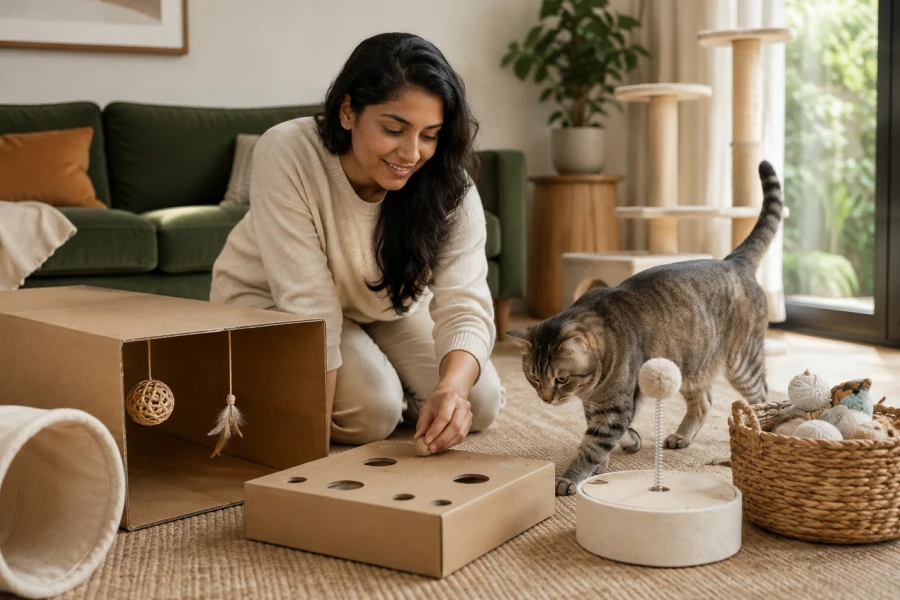
A quiet cat is not always a fulfilled cat. Cat boredom busters at home offer simple ways to add interest without overfilling your rooms with new products. The most effective ideas often build on what your cat already enjoys. A cat who watches shadows may appreciate a slow-moving light reflection. One who opens cabinets may be asking for more exploration. These behaviors are invitations to look closer at the daily environment. You can answer them with rotation, safe searching games, and moments of shared play. The goal is not constant entertainment. It is a home that offers your cat opportunities to choose, explore, and rest. A few well-timed changes can make familiar spaces feel surprisingly new.
Before changing the environment, study what already attracts your cat. Notice favorite windows, resting spots, routes, and play habits. Some cats seek climbing while others prefer hiding under a chair. A curious cat may enjoy finding treats in a new place. A cautious cat may need more time before trying anything unfamiliar. These differences should shape your choices. Practical indoor cat stimulation works best when it respects personality. Start with one small change rather than rearranging everything. Watch the response without trying to force interest. Your cat will show you which direction feels promising. Those details make future activities more successful.
Even beloved toys can disappear into the background when they remain available every day. A simple rotation can make old favorites feel new again. Put away most items and leave only a few choices out. Switch them after several days or when interest fades. This approach avoids clutter while preserving novelty. Consider grouping toys by the kind of play they encourage. Keep one chase item, one object for batting, and one quieter option. A thoughtful cat play rotation makes each return feel like a small event. Inspect items before bringing them back into the room. Replace damaged pieces immediately. Less availability can create more excitement.
You do not need a large home to create more interesting daily choices. Look for unused corners, safe low shelves, and open floor space. A cardboard box can become a new hideout when placed near a familiar route. A blanket draped over a chair can create a temporary tunnel. Shift a resting bed near a window for a fresh view. Small changes invite your cat to revisit the room differently. Use treats sparingly to encourage investigation. Let the activity remain optional and easy to leave. A room becomes richer when it offers both movement and retreat. Even one changed corner can become a welcome discovery.
Enrichment does not need to become a complicated schedule. A brief search game before breakfast can create a gentle start. A few minutes of movement in the afternoon may break up a long quiet stretch. Evening can be a good time for a slower activity near you. The rhythm matters more than the duration. Pair activities with moments your household already follows. This creates a personalized cat play routine that feels sustainable. Leave generous room for rest and independent exploration. Your cat does not need to participate every time. Consistency becomes easier when it respects ordinary life. Over time, small rituals can add real variety.
Independent activities are useful, but brief shared games can add another kind of interest. Follow your cat’s pace instead of deciding every movement. Move a toy behind furniture, then pause and wait. Let your cat stalk before inviting a chase. Use low, gentle motion for companions who seem easily startled. Keep the session short enough to end with curiosity still present. This protects the feeling that play is something to anticipate. Change the route or object occasionally to avoid predictability. You may discover that a quiet five-minute game becomes the favorite part of the day. Attention from you can be just as valuable as the toy itself. The connection grows when play feels cooperative.
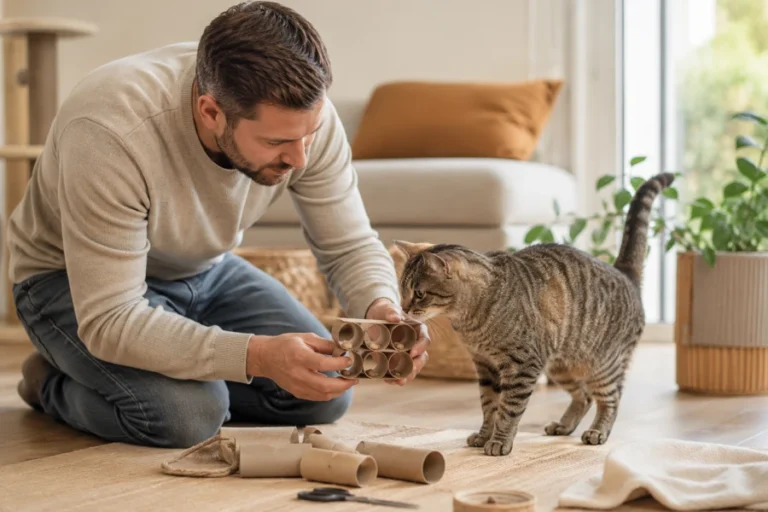
What delights your cat today may feel ordinary next month. Keep a short list of ideas that worked well, then revisit them later. Change a single detail when you bring an activity back. Move the box, alter the treat location, or use a new paper texture. Simple adjustments can produce fresh creative cat activities without starting from scratch. Pay attention to signs of interest rather than expecting the same response every time. A flexible approach reduces pressure on both of you. It also makes enrichment easier to maintain during busy weeks. The most useful routine is one you can genuinely enjoy. Your cat benefits from that relaxed consistency.



Leave a comment