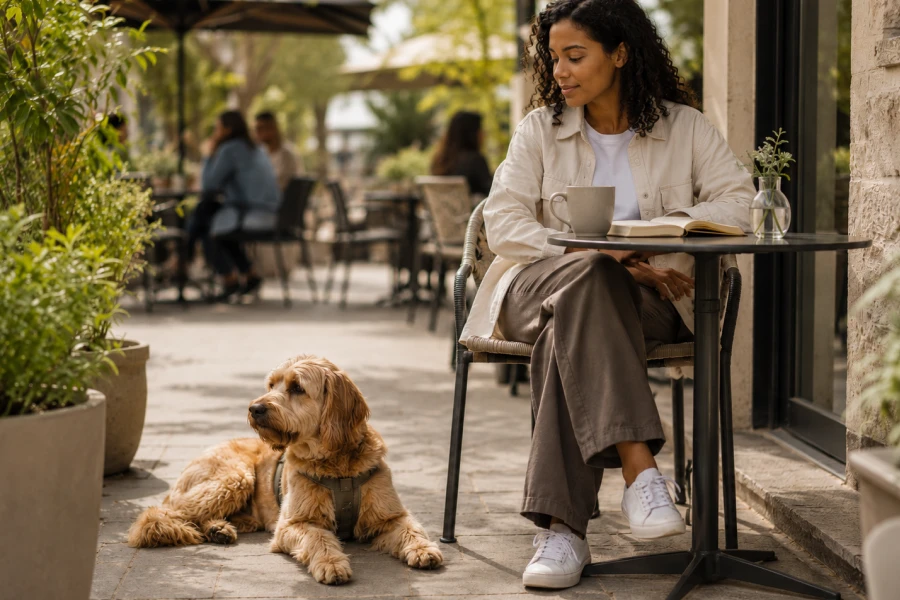
Most outings become harder when we expect dogs to understand busy places immediately. Learning how to teach a dog to settle in public begins long before a café patio or crowded park. First, your dog needs a clear picture of what rest feels like beside you. That picture forms through repetition, gentle pacing, and rewards delivered before tension rises. A quiet living room gives you useful feedback without competing noises. From there, tiny changes create confidence instead of surprise. The goal is not rigid obedience or a perfectly frozen posture. It is a dog who can exhale, observe, and return attention calmly. That emotional steadiness makes shared errands feel less like a performance. It also gives owners a practical way to read progress.
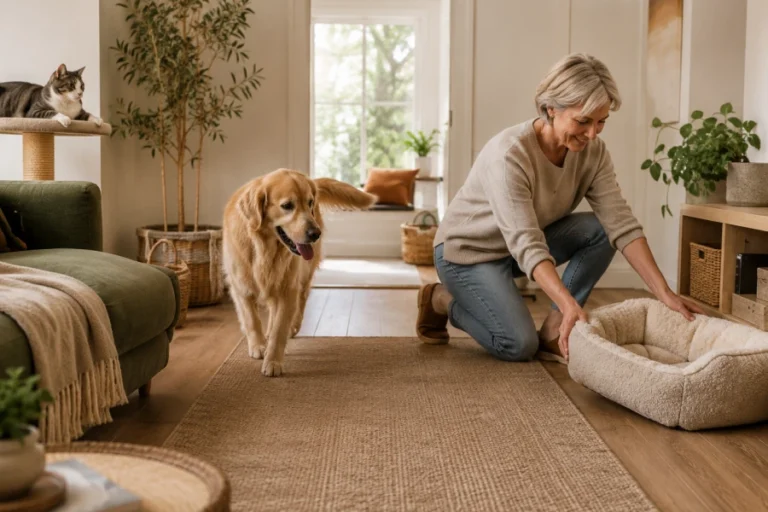
Home is where a calm behavior becomes familiar rather than demanding. Pick a predictable spot with enough room for a bed or mat. Keep early sessions short, especially for energetic or easily distracted dogs. Offer rewards while your companion is already relaxed instead of waiting for a mistake. This timing teaches that quiet choices are worth repeating. A calm cue for dogs can then become a simple signal for rest. Pair the cue with a slow breath, a settled posture, and a soft delivery. Avoid turning every practice session into a test of endurance. Finish while your dog is successful and interested. Those small wins make later public work feel recognizable.
A dog can look still while feeling completely overwhelmed. Watch the whole body instead of focusing on a single position. Loose muscles, normal blinking, and easy breathing often reveal genuine comfort. Repeated scanning, pinned ears, or frantic licking may suggest the setting is too demanding. Owners benefit from learning to notice dog stress signals before behavior escalates. When those signs appear, add distance rather than pressure. A few steps away from the noise can restore your dog’s ability to think. This adjustment is not a failure or a retreat. It is thoughtful progressive exposure for dogs in real time. The best training plan always leaves room for the dog in front of you.
Once rest has meaning at home, make the cue easy to understand. Say it once, then give your dog time to choose the behavior. Repeating the word quickly can make it fade into background noise. Instead, reward the first soft shift toward the desired position. Use the same mat, blanket, or portable bed during early sessions. Consistent props can support settle mat training without making the process complicated. Gradually vary where the mat appears around your home. Try the kitchen, a porch, or the driveway before choosing louder locations. Each new setting should feel only slightly harder than the last. Repetition builds a dependable response that travels well.
Public spaces offer far more information than most dogs can process at once. Choose quiet hours when you are introducing a new environment. A nearly empty park bench may be more useful than a bustling weekend market. Park at a distance and let your dog watch the scene first. Keep the leash loose enough for natural movement and turning. Bring high-value rewards without using them to bribe through panic. Thoughtful public dog training favors observation over forced interaction. A short five-minute session can be much more productive than thirty difficult minutes. Leave while your dog still feels capable. That choice protects the pleasant association you are building.
Distractions become useful only when they are introduced at an appropriate level. Begin with movement that stays far enough away to remain manageable. A passing cyclist, rustling bag, or distant dog can become a practice opportunity. Reward your dog for noticing and then reconnecting with you. This pattern builds a thoughtful response instead of a reflexive reaction. Do not rush toward more difficult scenes because one session went smoothly. Real dog distraction training often looks quiet from the outside. You may simply be sitting together near mild activity. Over time, that ordinary repetition changes how your dog expects the world to feel. Calm becomes a practiced option rather than a lucky moment.
Successful public behavior should support a fuller life for both of you. It can make morning coffee runs, family gatherings, and travel stops feel more accessible. Focus on building relaxed dog outings, not a flawless dog who ignores every stimulus. Your dog is allowed to notice the environment and remain curious. What matters is the ability to recover and choose calm again. Keep notes about locations, distances, and situations that felt easiest. Those details reveal patterns you can use for your next practice session. Celebrate steady improvement even when it arrives in small increments. A reliable settling habit grows through patience, not pressure. Soon, your shared world can feel calmer, wider, and more enjoyable.

Leave a comment