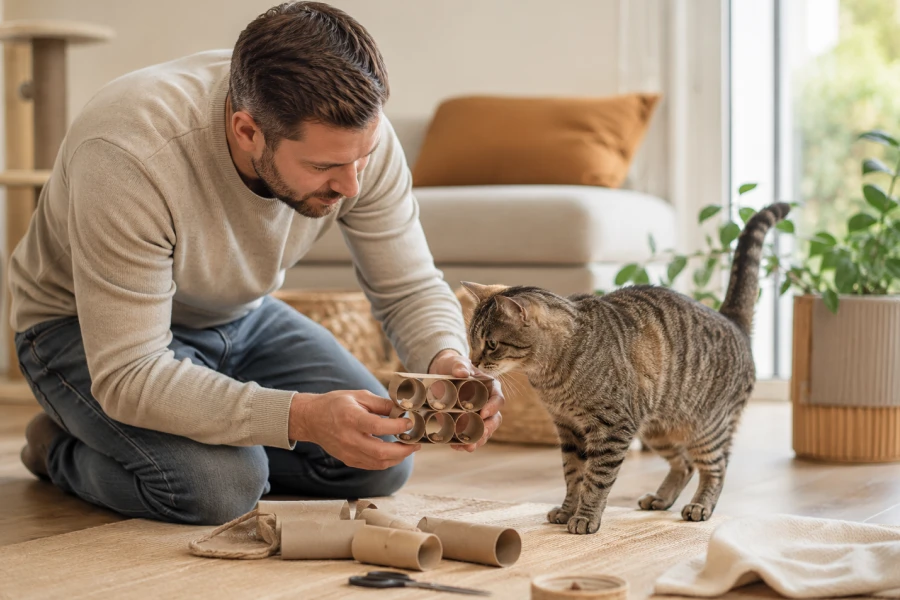
Some of the most engaging cat activities begin in the recycling bin. Homemade cat toys from household items make it easier to turn routine objects into fresh play opportunities. They invite you to notice materials in a new way. A small cardboard box can become a lookout point, a hiding space, or a gentle puzzle. A paper ball can become a moving target across the floor. The appeal comes from novelty, movement, and the chance to investigate. You do not need to create a perfect project on the first try. Instead, build one simple idea and watch what your cat does. Those reactions can lead to more thoughtful choices next time. Play becomes a creative conversation rather than a fixed routine.
Cats often enjoy activities that let them explore with their paws, eyes, and nose. Start with objects that are clean, sturdy, and easy to supervise. Choose one material, then give it a purpose. A cardboard tube may hold a few treats or roll across a rug. A paper bag without handles can become a temporary hiding spot. Avoid adding too many features at once. Simple designs help you identify what your cat actually likes. Thoughtful creative cat activities make room for trial and error. Your cat may prefer crinkling sounds, hidden rewards, or quick movement. Each response gives you a new clue. Curiosity is the real ingredient behind a successful project.
Good play often follows a satisfying beginning, middle, and end. Begin with a brief moment of watching or searching. Add movement that lets your cat decide whether to approach. Then allow a gentle chase or pawing moment. Finish with a catch, a treat, or a calm pause. This sequence can make even the simplest setup feel complete. Try a rolled paper ball, then stop it behind a box. Let your cat investigate before moving it again. Small adjustments can make interactive cat playtime feel more natural. Avoid keeping the toy in constant motion. Moments of stillness often create anticipation. A slower pace can be surprisingly engaging.
Food can become part of enrichment without making the process complicated. Place a few pieces of regular food inside a safe container with easy openings. Let your cat nudge, roll, or reach to access them. Start with an option that succeeds quickly. The first experience should feel rewarding, not frustrating. As your cat becomes comfortable, change the placement or add a second simple obstacle. Well-designed homemade puzzle feeders can turn a small part of mealtime into an exploration. Keep portions modest and consider your cat’s normal feeding routine. Remove the item after the activity ends. A short challenge is often enough to make the routine feel new.
The charm of household projects should never outweigh sensible supervision. Skip objects with loose parts, sticky residue, sharp edges, or fragile surfaces. Choose larger pieces that cannot easily be swallowed. Check cardboard for staples and remove handles from paper bags. Keep string, ribbons, and elastic items out of every project. Use toys only when you are nearby during the early trials. Watch whether your cat chews, tears, or carries the object. Adjust the project as soon as it stops looking sturdy. A safe setup allows you to focus on fun rather than worry. Every successful activity begins with materials that suit your cat’s habits.
Movement changes how a cat sees an otherwise ordinary object. Roll, slide, or hide a lightweight item in a way that feels unpredictable. Keep the motion low to the ground for cats who enjoy stalking. Use short stops so your companion has time to decide what happens next. A box can make an excellent obstacle for a slow-moving target. These simple choices create satisfying cat hunting games without requiring a large space. Let your cat win often enough to keep the activity positive. End the game before attention fades completely. Store the toy away for another day. A little absence can make the next session more exciting.
Every cat changes preferences over time, especially as routines and seasons shift. Keep your projects flexible instead of treating them as permanent designs. One week, a paper tunnel may become a favorite. Another week, your cat may prefer a quiet food-search activity. Use those changes as inspiration rather than a reason to abandon the habit. When you need a fresh spark, AI cat toy ideas can help you brainstorm new variations. Pick one idea that matches your available materials and your cat’s style. Test it briefly, then refine it based on the response. The result is a small but meaningful library of play options. Your home stays more interesting because the activities keep evolving.




Leave a comment