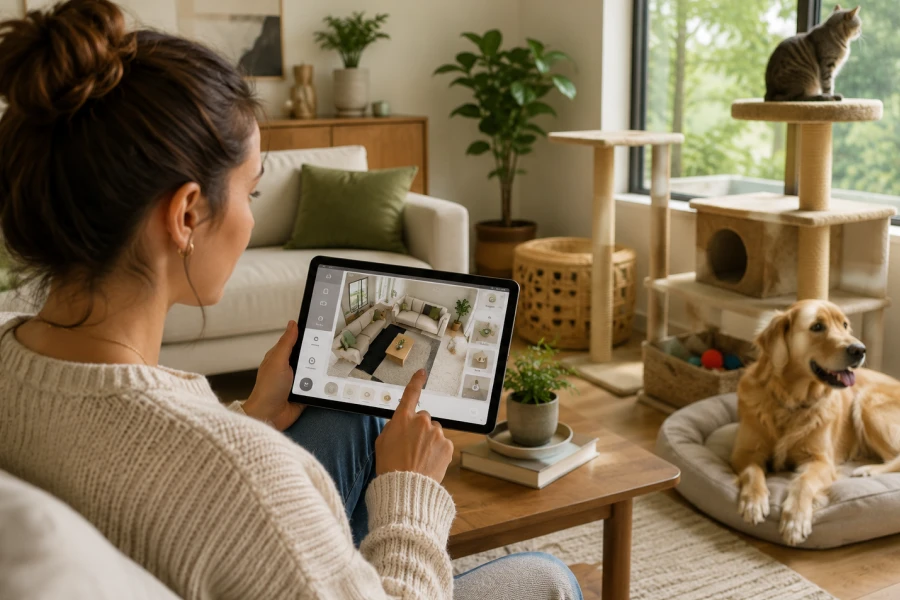
Good rooms have a way of making daily life feel easier without drawing attention to themselves. AI pet friendly room design brings that same thinking to spaces shared with dogs and cats. It helps you look beyond color palettes and furniture placement. Instead, you can consider how your pet moves, rests, observes, and joins the household. A beautiful room becomes more useful when it supports those routines. Small layout choices can reduce awkward traffic patterns and unused corners. They can also create a clearer balance between human style and animal comfort. Technology offers a practical way to test options before making big changes. You still decide what feels right for your home. The difference is that you begin with more useful questions.
Every practical plan begins by noticing how the room actually functions. Watch where your pet enters, turns, pauses, and settles throughout the day. A dog may circle the sofa before choosing a place to rest. A cat may prefer a sunny shelf that offers a view of the room. These ordinary patterns reveal more than a furniture catalog ever could. Start by writing down the busiest paths and favorite resting zones. Then consider whether existing pieces help or block those routines. Smart pet-safe furniture placement begins with real behavior rather than a generic template. The strongest room feels intuitive to every member of the household. Observation gives your next decision a purpose.
A room that looks open from standing height may feel very different near the floor. Get low for a moment and notice what your pet sees. Look for tight turns around tables, blocked views, or exposed cords. Consider whether a resting bed sits beside a busy path. A few inches can change how easily an animal moves through the room. Pay attention to doorway bottlenecks and furniture legs that create narrow passages. Good layouts give pets enough room to pass without feeling trapped. They also let people move naturally without stepping around every bed or toy. This perspective can reveal simple changes you may have missed. Better design often begins by changing your viewpoint.
Digital planning can make it easier to imagine more than one possible layout. Start with the room’s key elements, including doors, windows, feeding areas, and favorite pet zones. Then test what happens when large furniture moves slightly. A chair shifted away from an entry may open a calmer route. A low storage unit may define a space without blocking the entire room. Useful pet movement pathways keep routine travel simple for both people and animals. You can compare options before lifting anything heavy. This turns rearranging into a thoughtful experiment instead of a frustrating guessing game. The goal is not empty space everywhere. It is clear space where movement matters most.
Safety does not need to erase personality from a home. Begin with the obvious concerns, such as unstable décor, reachable cords, and items that can tip easily. Then look at smaller details that are easy to overlook. A trailing cable may become inviting to a curious cat. A narrow gap behind furniture can collect items you would rather keep inaccessible. Make changes that blend naturally with your existing style. Storage baskets, cord covers, and heavier bases can solve practical problems quietly. Thoughtful hazard-free pet spaces feel welcoming rather than restrictive. Your room can still look considered and personal. The safest solution is often the one that feels built into the design.
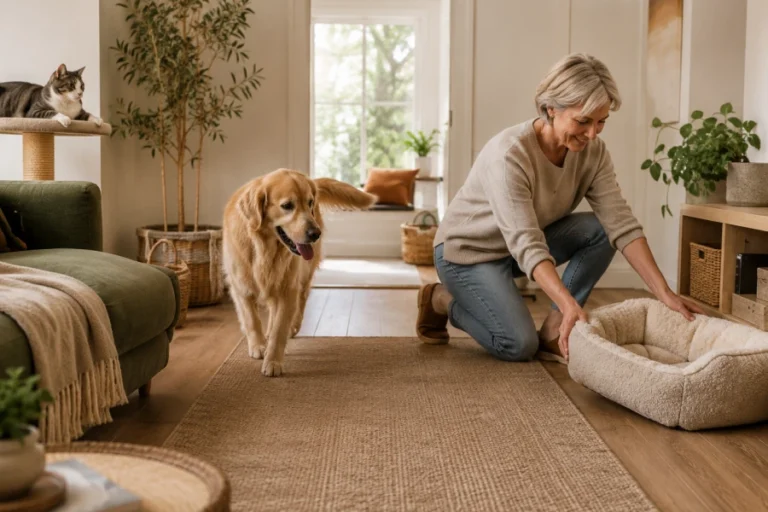
Pet comfort works best when it feels integrated instead of added as an afterthought. Choose resting spots that offer calm, visibility, or warmth according to your pet’s preferences. A bed beside the sofa may suit a social dog. A perch away from foot traffic may suit a cat who likes to watch quietly. Keep feeding and litter areas where they can remain accessible without dominating the room. Use texture, baskets, and low-profile storage to blend practical items into the décor. The layout should give pets choices without making every surface feel dedicated to them. Consider light, noise, and temperature as part of the overall experience. Comfort does not always mean the softest object in the corner. It means a setting that supports your pet’s normal routines.
Technology can offer options, but the finished room should still feel personal. Use planning tools to explore possibilities, then trust your knowledge of your household. Keep the colors, shapes, and materials that make the space feel like yours. Introduce changes gradually so your pet can adjust without confusion. Notice what improves daily life after each small update. A clearer walkway or better resting corner can have an immediate effect. Let function and style support each other rather than compete. Revisit the layout when routines change or a new pet joins the family. The most successful room is not a showroom display. It is a flexible setting where everyone can move, rest, and connect comfortably. That sense of ease is the real design achievement.

Leave a comment