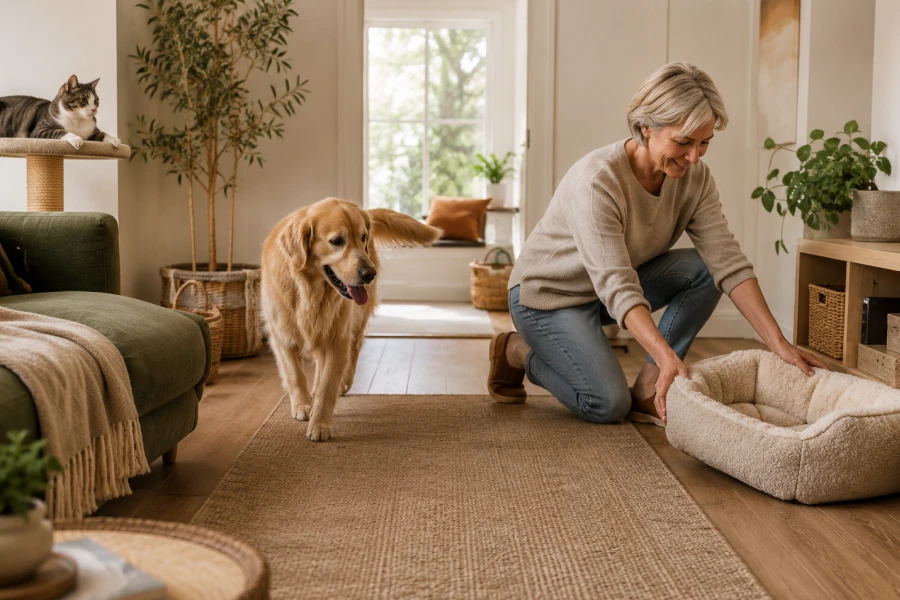
Rooms work better when their layout follows the life happening inside them. A pet safe room layout considers the little movements that repeat every day. It notices where a dog turns around near the door or where a cat darts beneath a chair. Those habits may look ordinary, yet they shape how comfortable the space feels. A room can be stylish and still leave enough room for animals to travel with ease. The key is not removing all furniture or pet items. It is arranging them so movement feels simple and predictable. This often means paying closer attention to pathways than to empty floor area. When the layout respects routine, safety becomes easier to maintain. The result is a home that feels calmer for people and pets alike.
Doorways often reveal whether a room works well for pets. They are places where people arrive, dogs greet, and cats decide whether to pass through. Start by looking at what happens during the busiest moments of the day. Is there enough room for everyone to move without bumping furniture? Does a pet bed sit where it will constantly be stepped around? Can a curious animal reach bags, shoes, or cords dropped near the entrance? These questions lead to practical improvements quickly. A clear doorway can reduce confusion before it begins. Try moving one piece of furniture and watch how traffic changes. Small shifts often matter more than a complete redesign. The entrance sets the tone for the entire room.
Resting spots work best when they match a pet’s personality and daily needs. A social dog may want a bed near family activity. A watchful cat may prefer a raised corner with a broad view. Think about light, temperature, and foot traffic before choosing a location. Avoid placing beds directly in narrow routes or beside loud appliances. A good resting area lets your pet choose closeness without feeling crowded. Thoughtful pet comfort zones can make the room feel more settled for everyone. Add soft texture or a familiar blanket rather than overcomplicating the space. Keep access clear so animals can use the area confidently. Comfort grows from consistency as much as softness.
Pets need clear routes through a room just as people do. Map the everyday paths from doorway to sofa, window, water bowl, and favorite hiding place. Look for awkward turns that make an animal squeeze past furniture. A coffee table may be beautiful but poorly placed for a high-energy dog. A storage cube may block the route a cat uses to reach a perch. An effective home layout for dogs and cats leaves enough space for natural choices. You do not need to eliminate every obstacle. You simply need to avoid making routine movement unnecessarily difficult. Open routes can make a busy household feel less frantic. They also help the room remain easier to clean and maintain.
Safety improves when it is built into the room rather than handled as a daily worry. Secure tall furniture that could become unstable during climbing or play. Keep delicate objects beyond easy reach when possible. Store cleaning products, small accessories, and cords in appropriate closed areas. Choose sturdy storage for toys so the room does not become cluttered. Consider the spaces behind and beneath furniture, not only what is visible. Those tucked-away spots can attract curious pets. Well-planned pet-proof room solutions can be discreet and attractive. You are not designing for fear. You are designing for everyday ease. That makes the home more livable for everyone.
Practical rooms do not have to feel stripped of character. Use baskets, low cabinets, and fabric storage to keep pet items close but composed. Select materials that suit both your décor and your maintenance needs. A washable rug can still bring color and softness. A sturdy side table can still feel sculptural and interesting. Bring pet accessories into the overall palette instead of treating them as visual interruptions. This makes the room feel deliberate rather than compromised. Let your favorite pieces remain part of the plan when they can do so safely. Design gets stronger when constraints inspire better choices. Style and function can coexist without asking either one to disappear.
A good room evolves as pets and routines change. A young animal may need more open floor space for play. An older companion may benefit from easier access to favorite places. Guests, seasonal changes, and new furniture can also alter the room’s rhythm. Revisit your layout when something begins to feel inconvenient. Move one item at a time and notice the difference. Keep what works, then adjust the next detail. There is no need to reach a permanent final version. Flexibility is one of the most useful features a shared home can have. A room that adapts well remains safer and more comfortable. That thoughtful responsiveness is what makes a layout feel truly successful.


Leave a comment