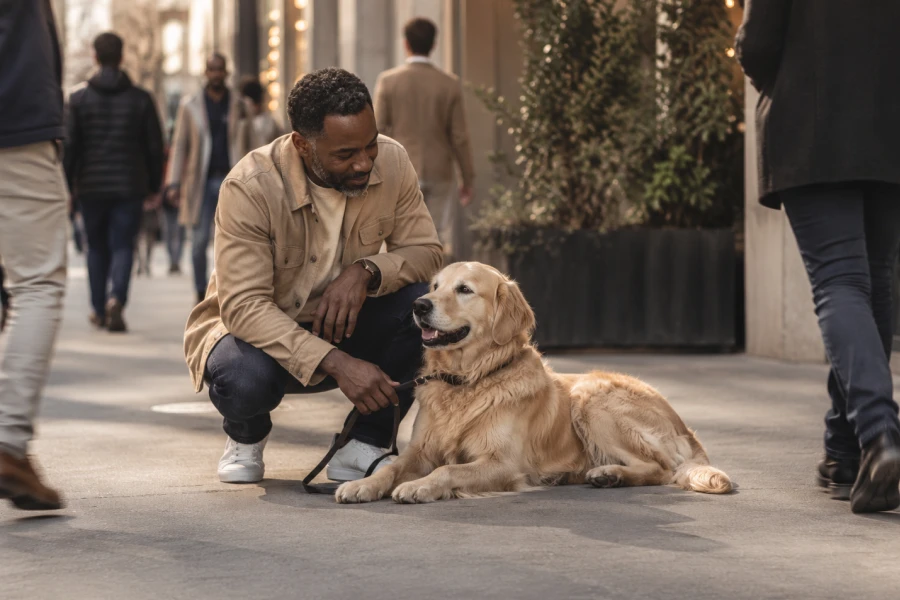
Busy places do not have to become a source of tension for you or your dog. Dog calm training in public creates a bridge between peaceful moments at home and unpredictable daily life. It teaches your companion that movement, voices, and new smells can exist without requiring a reaction. That lesson becomes valuable whenever routines take you beyond familiar walls. Instead of chasing social milestones, start by protecting your dog’s sense of safety. The most useful practice happens at a pace your dog can handle. It may begin near a quiet storefront, a parked car, or an open corner of a park. Small successes build trust between you. With time, familiar calm can accompany you almost anywhere. The result is a more confident companion and a more flexible life together.
Calm behavior is not only about following directions in front of strangers. It also reflects how well your dog trusts your guidance in new situations. When you pause, breathe, and make room for choice, your dog receives useful information. Your body language can either increase urgency or soften it. Move deliberately rather than pulling toward the next challenge. A strong outdoor dog training routine gives both of you a shared rhythm. Practice arriving, observing, resting, and leaving before your dog becomes overloaded. This predictable sequence can feel reassuring when everything else seems new. Patience makes your guidance easier to trust. That trust turns calm into a relationship skill rather than a command.
Begin in places where you can control distance and duration. A wide sidewalk during a quiet hour can work better than a packed event. Watch how your dog responds before moving closer to activity. Some companions need several visits at the same distance. Others settle quickly but struggle when sound levels change. There is no reward for advancing before the behavior is ready. Build sessions around your dog’s actual comfort, not a calendar. This is where a simple dog behavior tracking habit becomes useful. Note what happened, how long you stayed, and what helped. Clear observations make your next decision more thoughtful.
Every dog will have moments when the environment feels too intense. The important skill is not avoiding every surprise. It is helping your dog recover without adding drama. When a truck rattles past or another dog appears, create more space calmly. Turn away, scatter a few treats, or move behind a visual barrier. Give your companion time to reset before asking for anything else. This approach supports dog confidence building because the dog learns that you respond helpfully. Recovery teaches more than endurance ever could. It shows that difficult moments have an exit. A dog who expects support often settles faster next time. That is the kind of progress worth protecting.
Correction can make public spaces feel more unpredictable for a worried dog. Structure gives clear information without adding pressure. Create a simple routine for every outing, even short neighborhood walks. Start with a brief pause, then invite your dog to walk or rest. Reward check-ins that happen naturally instead of demanding eye contact every few seconds. Carry a familiar mat when you expect to sit outdoors. Use calm voice cues and avoid quick, frustrated movements. A thoughtful calm dog socialization plan lets your dog watch people from a comfortable distance. Connection grows when your dog discovers that social settings can remain predictable. The lesson feels simple, but its effect can last.
Some dogs relax best when they have something to do with their noses. Others settle more easily after a short walk that releases initial energy. Age, health, previous experiences, and temperament all shape the ideal session. Avoid comparing your dog’s progress with another dog at the same café. Your companion’s success may be resting two minutes farther from the entrance. That is still meaningful growth. The most valuable measure is whether your dog returns to a softer state more easily. Use rewards, distance, and rest breaks as flexible tools. Let each session reveal what your dog needs next. Personalization keeps the work humane and effective. It also makes repeated practice easier for you to sustain.
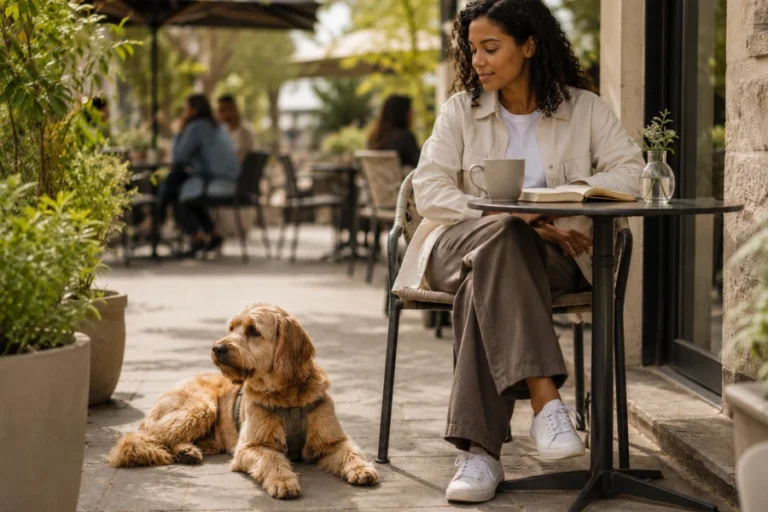
A settled dog can make ordinary plans feel more open and enjoyable. You may start taking longer walks, visiting quiet patios, or stopping beside a playground. Those opportunities should remain invitations, never obligations. Continue choosing environments that suit your dog’s current abilities. Bring water, familiar rewards, and a comfortable portable resting spot. End the outing before your dog looks depleted or irritable. This protects your progress and reinforces the idea that the world is manageable. Over time, your dog may begin offering calm behavior without a prompt. That shift often arrives after many unremarkable repetitions. Keep your expectations warm and realistic. The shared routine will become calmer because both of you know what to do.

Leave a comment