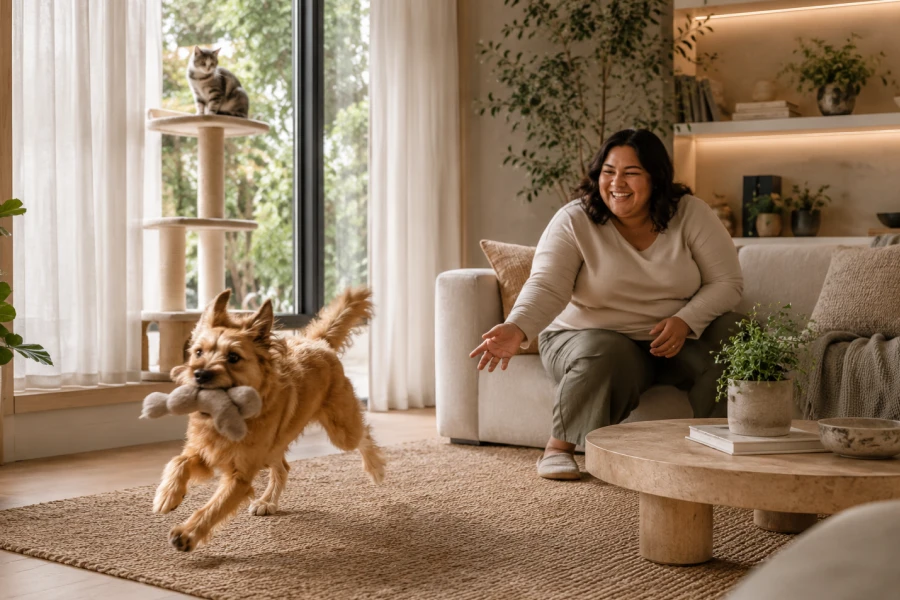
Living with pets does not require choosing between a beautiful home and a practical one. Pet friendly home layout ideas can make shared spaces feel more thoughtful, flexible, and easy to enjoy. The best concepts begin with the rhythms already happening in your rooms. They notice the quick route your dog takes to greet you. They consider the sunny spot your cat claims every afternoon. These patterns can shape a home that feels natural instead of overly managed. A few intentional adjustments often make a larger difference than a full makeover. You may open a pathway, create a better resting zone, or rethink where supplies belong. Every choice can support both comfort and visual calm. Good design simply makes daily life flow better for everyone.
Start by tracing the routes people and pets use most often. Notice where movement becomes crowded or where furniture creates an unnecessary detour. A narrow passage can feel inconvenient even when it looks acceptable in a photo. Open space near entrances may matter more than an extra accent chair. Keep high-traffic paths clear enough for people and animals to pass naturally. This reduces awkward weaving during busy times. Practical smart pet home planning treats circulation as a design feature, not leftover space. Take a slow walk through each room at different times of day. You may notice obstacles that disappear when the house is quiet. Those observations give you a useful starting point.
Pet supplies can look more cohesive when storage has a clear place in the room. Use baskets, lidded bins, or low cabinets to keep everyday essentials close. Group items by routine instead of scattering them across several rooms. A small station near the entry can hold leashes, towels, and cleanup supplies. A discreet container near the sofa can keep toys within reach. This reduces clutter without making pet care feel inconvenient. Choose pieces that work with the rest of your furniture. You can keep the visual language consistent through material, color, or shape. Good storage makes maintenance easier on busy days. It also helps the room remain ready for company without a last-minute scramble.
Comfort works best when it is placed where a pet naturally wants to be. Observe whether your dog seeks closeness, quiet, warmth, or a view. Notice whether your cat prefers height, privacy, or a place to monitor activity. Then create options that match those preferences. A bed beside the sofa can support social rest. A window perch can offer visual interest without taking over the room. Avoid placing comfort zones in pathways where people constantly step around them. A small adjustment can make the space feel much more inviting. Let each area remain easy to access and easy to clean. Pets use comfortable spaces more often when those spaces fit their routines.
Materials can help a home feel polished while remaining easier to maintain. Consider washable textiles, durable upholstery, and surfaces that tolerate ordinary cleanup. The goal is not to make every finish purely utilitarian. It is to select options that let you enjoy the room without constant worry. Layer texture through rugs, cushions, baskets, and throws that suit your household. Smart choices can be both attractive and forgiving. Thoughtful stylish pet-safe interiors prove that resilience can still look refined. Keep delicate items in places that do not invite accidental bumps. Make cleaning supplies easy to access without letting them dominate the décor. A home feels more relaxed when care is built into the design.
Pet-oriented choices do not need to look generic or overly themed. Let accessories complement your existing taste. A ceramic water bowl can echo the room’s colors. A woven basket can hide toys while adding texture. A low bench may create a useful perch beside a window. These details work best when they feel like part of the room’s overall story. Explore pet-friendly decorating ideas that solve a practical need and add visual interest. Keep surfaces edited so the space does not become visually busy. A few purposeful objects make a stronger impression than many small ones. Personality grows through thoughtful selection. Your home can reflect both your style and the lives happening inside it.
Flexibility makes a layout more useful than any single perfect arrangement. Leave room to adapt when a pet’s needs or your routines change. A young dog may need an open play area today. A senior companion may need easier access to a favorite bed later. Guests, seasonal décor, and new furniture can also reshape the room. Make changes in small stages so you can see what truly improves the space. Keep a few elements movable rather than locking every zone into place. This makes future adjustments less disruptive. Revisit what works after you have lived with the setup for a while. Your best layout will continue to learn from everyday life. That willingness to refine is what keeps the home comfortable and beautiful.

Leave a comment