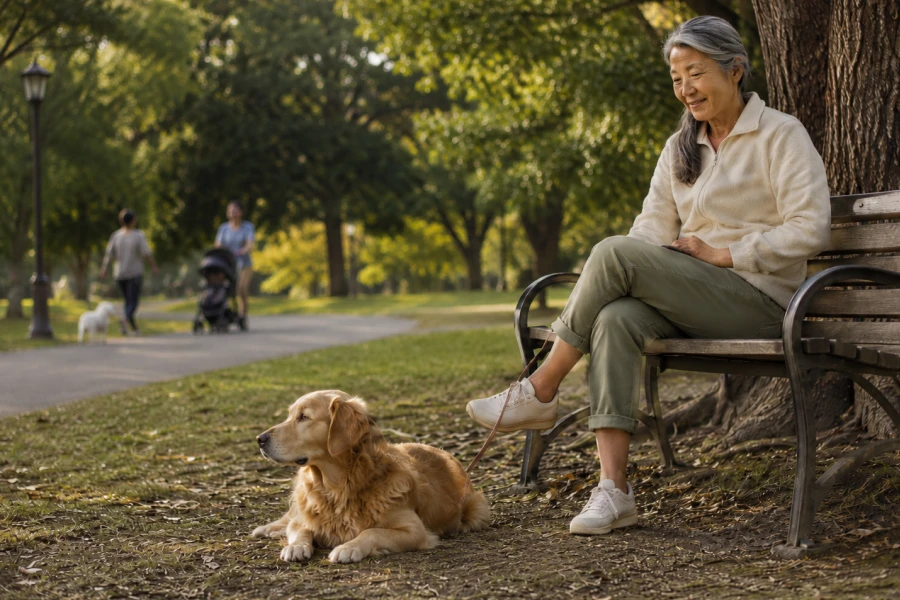
Outdoor life can feel exciting, confusing, and intensely stimulating for a dog. Effective outdoor dog settling techniques help transform that flood of information into manageable practice. They do not ask a dog to ignore the world completely. Instead, they teach a useful rhythm of noticing, pausing, and returning to safety. The process works best when it starts with realistic expectations. A dog may need time to watch birds, hear traffic, or smell the air. That curiosity is normal and does not cancel the value of training. What matters is whether your companion can settle again after noticing. Repeated opportunities create resilience without forcing a polished performance. Your patience becomes part of the environment your dog learns to trust. Soon, calm can become a familiar choice outdoors.
Choose the smallest version of the outing that still feels meaningful. Sit on your front steps before practicing near a crowded trail. Let your dog notice distant activity from a safe, wide space. Bring a portable mat that signals a familiar place to rest. Reward voluntary softening, such as a hip shift or relaxed breath. Keep your own posture neutral and your movements slow. A public dog training session can be successful even when you never leave your block. The goal is a reliable emotional response, not dramatic scenery. Short sessions keep the experience positive. That foundation will support more adventurous days later.
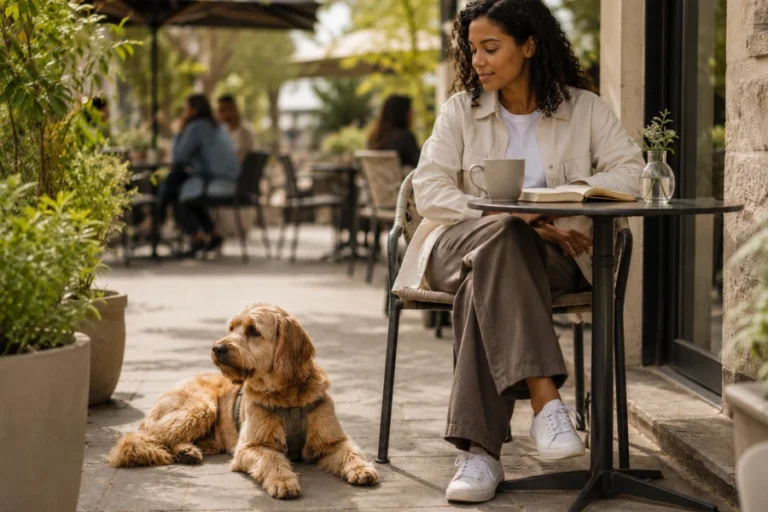
Not every location gives you the same chance of success. Wind, crowds, other animals, and unfamiliar noises all change the difficulty level. Visit new places first without a training agenda when possible. Notice where people pass, where dogs gather, and where you can create space. Positioning matters more than many owners realize. A bench facing away from foot traffic can reduce pressure immediately. Shade and a quiet edge may help a dog relax more easily. Planning around these details supports relaxed dog outings. Better setup means fewer moments where your dog has to work too hard. Thoughtful choices often make training feel surprisingly simple.
Dogs often feel safer when an outing follows a recognizable pattern. Begin with a few quiet steps rather than launching straight into activity. Pause at the edge of the space and let your dog gather information. Then move to the resting spot and offer the familiar cue. Use the same settling item whenever possible during early practice. Reward calm choices without talking constantly. A consistent rhythm helps your dog predict what will happen next. It also prevents owners from improvising under pressure. Routine gives outdoor practice a clear beginning, middle, and end. This structure can be especially helpful in places with changing activity. Familiarity becomes a portable form of comfort.
Distance is one of the kindest tools available during outdoor practice. It gives your dog enough room to observe without tipping into overwhelm. Do not wait for barking or lunging to decide that a situation is too close. Move earlier when you see tension starting to build. The goal is to keep the brain available for learning. Clear space also makes it easier to reward calm recovery. This is where dog distraction training becomes more thoughtful than simply testing tolerance. Your dog does not need to greet every person or animal. Looking, pausing, and moving on can be a complete success. Respecting boundaries creates better experiences for everyone.
Progress can be easy to miss when you only remember difficult moments. Keep simple notes after each outing to capture what actually happened. Record the setting, the distance from distractions, and the length of calm. Notice whether your dog recovered faster than last week. Those patterns can reveal which environments deserve another visit. They can also show when you need to make the next session easier. A few smart AI dog training tools can help organize observations for busy owners. Use technology to notice trends, not to replace attention. Your dog’s body language remains the most important source of feedback. Good records simply help you respond more consistently.
Training is easiest to maintain when it fits activities you already enjoy. Practice during a short morning walk, a school pickup wait, or a quiet picnic. Keep the expectations modest and the sessions flexible. Your dog does not need to settle for an hour to gain value. Two peaceful minutes beside you can change the next outing. Offer breaks when the environment becomes too demanding. End with a familiar activity that your dog enjoys. Repeat the same skills across different but manageable settings. With time, your companion will understand that outdoor calm is not unusual. It is simply another reliable part of life together. That lasting comfort is the real reward behind consistent practice.


Leave a comment