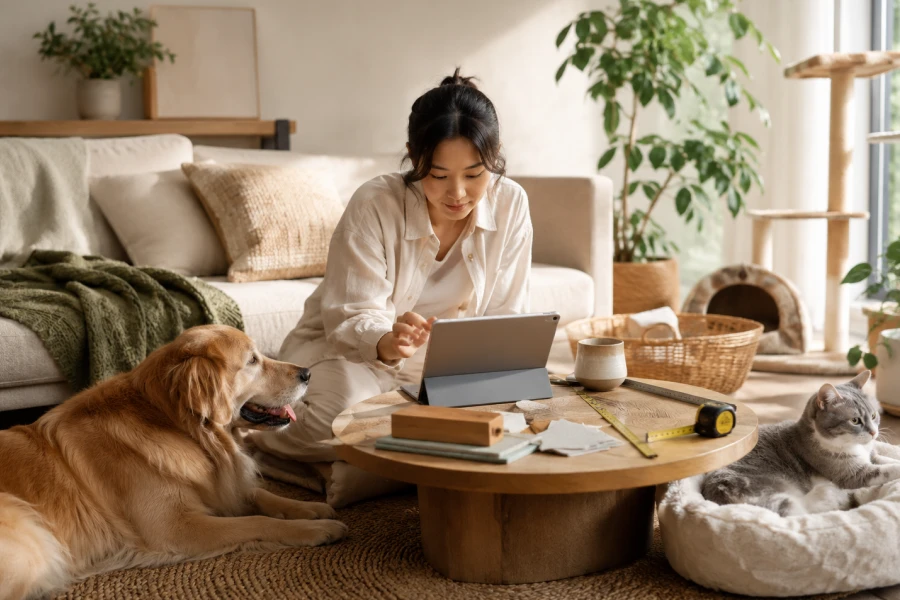
A room can look polished and still make everyday life harder than it needs to be. AI interior design for pet owners offers a fresh way to examine the gap between appearance and function. It can help you visualize options before rearranging furniture or buying new pieces. More importantly, it encourages questions about what pets need from the space. Where does your dog tend to wait? Which route does your cat use when the room gets busy? What areas collect clutter or create awkward turns? These details become the raw material for a smarter layout. Technology does not replace your instincts about your pet. It gives you a practical framework for exploring better possibilities. That can make design feel less intimidating and much more useful.
Before opening any planning tool, take a clear look at the room as it exists today. Notice what happens during play, meals, arrivals, and quiet evenings. Watch for places where your pet hesitates or reroutes. A dog may avoid a narrow lane between the sofa and table. A cat may climb because there is no clear place to observe from above. Your daily patterns matter more than a perfectly styled reference image. Effective animal-friendly interior planning starts with evidence from your own home. Take simple measurements and photos from multiple angles. Keep a short note about what feels inconvenient now. The better your input, the more useful your design options become.
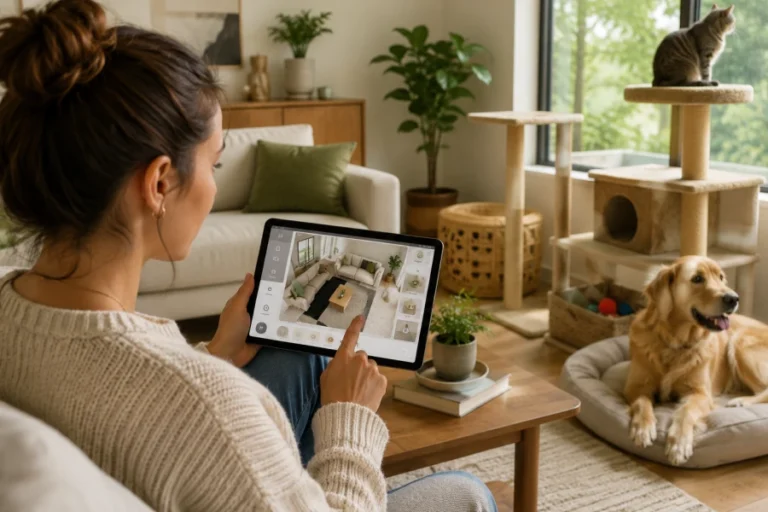
Digital tools are most helpful when they support experimentation. Try several arrangements instead of searching for one perfect answer. Move the sofa virtually, change a storage piece, or open a route near the window. Compare which version creates the clearest path through the room. Consider how each option affects the pet beds, feeding areas, and places people gather. Useful AI room planning for pets turns vague ideas into layouts you can evaluate. It also helps you avoid carrying heavy furniture through a series of disappointing experiments. Keep the results grounded in your actual space. The best design is still the one that fits your routines. Treat technology as a collaborator, not a final authority.
Not every problem deserves the same amount of attention. Start by separating daily friction from occasional inconvenience. A blocked feeding route may need action sooner than a rarely used corner. A wobbling shelf deserves more attention than a decorative item you could simply move. List your priorities in order of safety, comfort, movement, and appearance. This keeps visual choices from overshadowing important practical needs. Design tools can help you compare trade-offs more clearly. You may discover that one small move resolves several issues at once. A better priority list saves time, effort, and unnecessary purchases. It also prevents the room from becoming overdesigned. Clarity gives every change a reason.
Pet spaces work best when they feel easy to use rather than tucked away. Place a bed where it supports your pet’s favorite social rhythm. Keep a cat perch where it offers a view without creating a bottleneck. Use low storage to keep toys accessible but visually quiet. Let comfort items blend with the layout instead of treating them as temporary clutter. Consider whether a pet can reach the space without crossing the busiest path. Well-planned personalized pet space design creates useful choices for each animal. It does not force every pet into the same type of resting zone. The room becomes more peaceful when everyone has a place that feels appropriate. Ease is often the most attractive feature in a shared room.
New furniture should solve a real problem, not merely add visual interest. Use your layout ideas to identify what the room actually needs. Perhaps you need closed storage instead of another open shelf. Maybe a smaller coffee table would make an important pathway clearer. A washable rug might create a softer landing zone without crowding the room. Compare dimensions before you bring anything home. Think about how each item will change access, cleaning, and visibility. When a purchase supports more than one need, it often becomes the better choice. This approach makes design spending feel more intentional. It also helps prevent the room from filling with pieces that look good but work poorly. Practical decisions make style feel more satisfying.
Layouts do not need to remain fixed once you have found something that works. Pets age, routines shift, and homes change along with them. Revisit your room after a few weeks to see how the new setup feels. Ask yourself whether movement became easier or if new clutter appeared. Watch whether your pet uses the comfort areas you created. Keep the parts that improve daily life. Adjust anything that seems awkward rather than assuming you must live with it. Good design is a series of informed refinements. Technology can continue to support those decisions as your needs evolve. The room stays relevant because you allow it to change. That adaptability is one of the greatest advantages of planning thoughtfully.


Leave a comment